Critical Pods WordPress Plugin Vulnerability Puts 100,000+ Sites at Risk
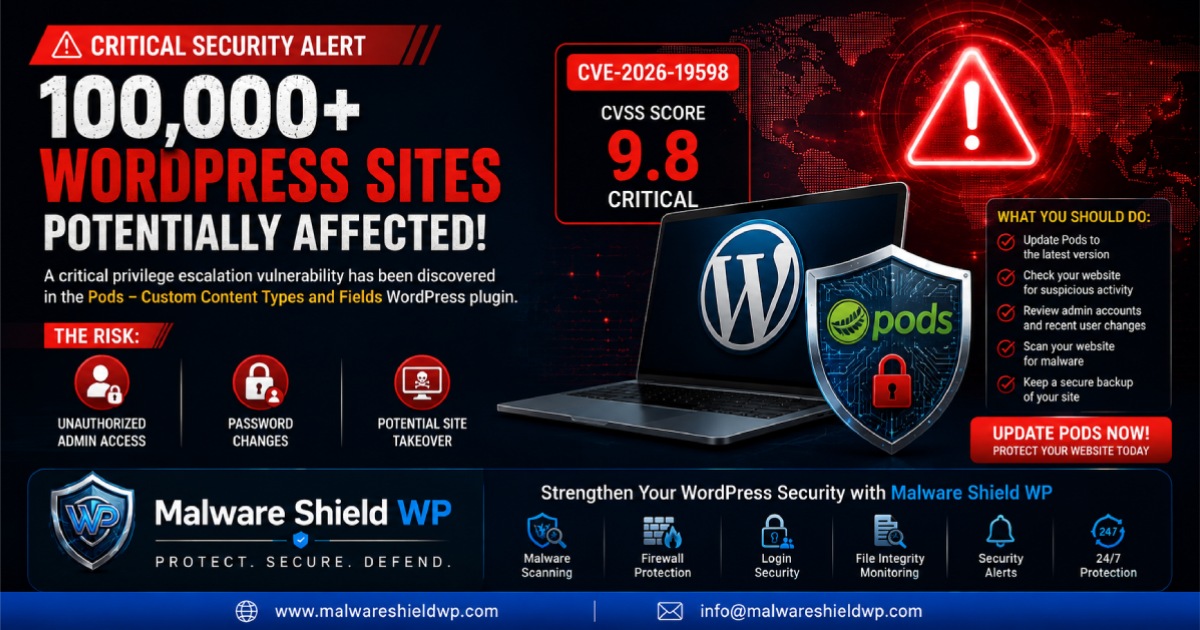
A critical privilege escalation vulnerability tracked as CVE-2026-19598 has been disclosed in the popular Pods WordPress plugin. With a CVSS score of 9.8, vulnerable installations could potentially allow unauthenticated attackers to gain administrator-level access.
A newly disclosed critical security vulnerability in the popular Pods – Custom Content Types and Fields WordPress plugin serves as another serious reminder of why WordPress website owners need to keep plugins updated and continuously monitor their websites for security threats.
The vulnerability, tracked as CVE-2026-19598, received a CVSS severity score of 9.8 out of 10, placing it in the Critical category.
Pods has more than 100,000 active WordPress installations, making the potential impact of the vulnerability significant.
What Is CVE-2026-19598?
CVE-2026-19598 is an unauthenticated privilege escalation vulnerability affecting vulnerable versions of the Pods WordPress plugin.
The security issue involves authorization checks within the plugin's administrative AJAX functionality.
Under vulnerable conditions, an unauthenticated attacker could potentially bypass access controls and perform privileged administrative actions.
The vulnerability affects Pods versions up to and including 3.3.9.
Why Is This Vulnerability So Serious?
Privilege escalation vulnerabilities are particularly dangerous because they can allow an attacker to obtain permissions they should never have.
According to the disclosed security research, successful exploitation could potentially allow an unauthenticated attacker to perform actions including changing the password of an existing WordPress user.
If the targeted account is a website administrator, this could result in complete website takeover.
An attacker with administrator-level control could potentially modify website content, create accounts, install malicious software, manipulate files, or otherwise compromise the WordPress installation.
Is a Security Patch Available?
Yes.
The Pods development team responded to the disclosure and released patched versions on August 14, 2026.
For sites using the current 3.3 branch, the fully patched release is:
Pods 3.3.9.1
Security fixes were also backported to earlier major versions, including:
- 3.2.8.3
- 3.1.4.2
- 3.0.10.4
- 2.9.19.4
- 2.8.23.4
WordPress website owners using Pods should verify that their installation is running an appropriate patched version.
What Should You Do If Your Website Uses Pods?
The first priority is simple:
Update the Pods plugin immediately.
Do not assume automatic updates have already handled the issue. Log in to your WordPress dashboard and verify the installed version.
After updating, website administrators should also review their websites for signs of suspicious activity.
Check administrator accounts and look for users you do not recognize.
Review recent password or account changes where possible.
Look for unexpected changes to important WordPress files.
Perform a malware scan and review relevant security logs.
Maintain a recent backup of the website before making major recovery changes if suspicious activity is discovered.
Why Plugin Updates Matter
WordPress itself can be secure while a vulnerable plugin introduces a new attack surface.
Plugins extend WordPress functionality, but they also add additional code to your website.
A security flaw in just one installed plugin can potentially expose an otherwise well-maintained website.
That is why WordPress security should include regular updates for:
- WordPress core
- Plugins
- Themes
- PHP and server software
Unused plugins and themes should also be removed rather than simply deactivated when they are no longer required.
Updates Are Essential, But Security Should Not Stop There
Installing security updates is one of the most important steps you can take, but a strong WordPress security strategy should use multiple layers of protection.
Website owners should also monitor for malware, suspicious login activity, unexpected file modifications, and malicious traffic.
This is where a dedicated WordPress security solution can provide additional visibility.
Strengthen Your WordPress Security with Malware Shield WP
Malware Shield WP is designed to help WordPress website owners strengthen their security posture through multiple protection and monitoring features.
Depending on your configuration and available features, Malware Shield WP can help provide security capabilities such as:
- Malware scanning
- Firewall protection
- Login security
- File integrity monitoring
- Suspicious activity monitoring
- Security alerts
- Ongoing website protection
No security plugin should replace timely vulnerability patching.
Instead, security monitoring and protection should work alongside regular WordPress, plugin, and theme updates to create a stronger layered defence.
The Bigger Lesson for WordPress Website Owners
The Pods vulnerability demonstrates an important reality of WordPress security:
A plugin does not need to be obscure or abandoned to experience a serious security vulnerability.
Even widely used software can contain previously undiscovered security flaws.
Website owners therefore need a security process rather than relying on a one-time setup.
Keep your software updated, remove unnecessary plugins, monitor important website activity, maintain backups, and use multiple security layers.
Final Thoughts
CVE-2026-19598 is a critical WordPress security vulnerability that website owners using the Pods plugin should take seriously.
If your website uses Pods, verify immediately that you are running a patched version.
Then review your website for suspicious activity and ensure that your broader WordPress security measures are active.
Security vulnerabilities cannot always be predicted—but being prepared can significantly reduce your exposure when the next vulnerability is discovered.
Stay updated. Monitor continuously. Protect your WordPress website.
Frequently Asked Questions
What is CVE-2026-19598?
CVE-2026-19598 is a critical unauthenticated privilege escalation vulnerability disclosed in the Pods WordPress plugin.
How severe is the Pods vulnerability?
The vulnerability has a CVSS score of 9.8, which is classified as Critical.
Which Pods versions are affected?
The vulnerability affects Pods versions up to and including 3.3.9. Users should upgrade to an appropriate patched release.
What is the patched Pods version?
For the current 3.3 release branch, 3.3.9.1 contains the security fix. Fixes were also backported to several previous major release branches.
Can Malware Shield WP replace updating vulnerable plugins?
No. Vulnerable plugins should always be patched immediately. Malware Shield WP should be part of a layered security strategy alongside timely WordPress, plugin, and theme updates.